Monday, October 13, 2014
Google Small Business: Measuring what matters for your small business
Google Small Business: Measuring what matters for your small business: Editor's Note: The SMB Blog team wants to wish everyone a Happy National Small Business Week ! To kick off the week, we're continui...

Google Small Business: Small businesses talk about growing online
With so much advice about what businesses should be doing online and
not always enough time to sort through it all, sometimes the most useful
thing is to hear from someone that’s doing it right.
Recently in Detroit, Accelerate with Google
was proud to take the stage with several local small business leaders
for a panel discussion on growing businesses and relationships online.
Joined by 80 other Detroit-area businesses at the Michigan Minority Procurement Conference, the panelists shared stories of their successes and challenges forming relationships in the digital age.
Google has worked with these businesses to help them grow their
presence online, and they’ve really embraced a digital-first strategy to
finding new customers. Here are some of their tips:
Amy Courter, Chief Information Officer, VisionIT
“A good starting point is to first define and align your strategy for
being online. Determine your goals, audience, message and interaction.
For VisionIT, our roots were in web development and part of this
industry requires us to continually evaluate our online presence. The
new age of marketing is about building brand, interest and awareness
through customer loyalty and adding value for the consumer. As
traditional models lose their efficacy, and inbound marketing gains
popularity, we learn that it’s more important to earn people’s interest,
instead of buying and forcing it.”
Leah Fairman, Director of Sales, Corporate Snobs
“Having an online presence has opened many doors for our company. We
have been able to capture a particular market share in our business that
our local competitors haven't due to a lack of their online presence.
Getting noticed when your customers are looking for your products and
services speaks volumes for your company. It sends the message that you
are serious about your business, trustworthy and in tune with current
technology. This makes you a serious player in your industry.”
Linzie Venegas, Chief Marketing Officer, Ideal Shield
“The most important thing that I have learned since I have moved to
online space is that you must put someone in charge; this person must
continuously evaluate your website as well as website presence. I have
also learned that it is important to adapt to new technology. For
instance, we are looking to move to
Google Apps for Business, and this will save our company money and allow
our IT people to work more efficiently.”
Later this week, another group of entrepreneurs we admire – some of the startup founders from the NewMe Accelerator – will sit down at Black Enterprise Entrepreneurs Conference
and share their wisdom on growing their internet businesses. Google
will also be there to share classroom-style workshops staffed by our
team on how to grow and promote your business online, and mastering
search engine strategies. The Entrepreneurs Conference has been a great
venue every year for entrepreneurs to network and find successful
strategies for growth, and we are looking forward to meeting some of you
there!
Posted by Chris Genteel, Business Development Manager - Global Diversity
not always enough time to sort through it all, sometimes the most useful
thing is to hear from someone that’s doing it right.
Recently in Detroit, Accelerate with Google
was proud to take the stage with several local small business leaders
for a panel discussion on growing businesses and relationships online.
Joined by 80 other Detroit-area businesses at the Michigan Minority Procurement Conference, the panelists shared stories of their successes and challenges forming relationships in the digital age.
Google has worked with these businesses to help them grow their
presence online, and they’ve really embraced a digital-first strategy to
finding new customers. Here are some of their tips:
Amy Courter, Chief Information Officer, VisionIT
“A good starting point is to first define and align your strategy for
being online. Determine your goals, audience, message and interaction.
For VisionIT, our roots were in web development and part of this
industry requires us to continually evaluate our online presence. The
new age of marketing is about building brand, interest and awareness
through customer loyalty and adding value for the consumer. As
traditional models lose their efficacy, and inbound marketing gains
popularity, we learn that it’s more important to earn people’s interest,
instead of buying and forcing it.”
Leah Fairman, Director of Sales, Corporate Snobs
“Having an online presence has opened many doors for our company. We
have been able to capture a particular market share in our business that
our local competitors haven't due to a lack of their online presence.
Getting noticed when your customers are looking for your products and
services speaks volumes for your company. It sends the message that you
are serious about your business, trustworthy and in tune with current
technology. This makes you a serious player in your industry.”
Linzie Venegas, Chief Marketing Officer, Ideal Shield
“The most important thing that I have learned since I have moved to
online space is that you must put someone in charge; this person must
continuously evaluate your website as well as website presence. I have
also learned that it is important to adapt to new technology. For
instance, we are looking to move to
Google Apps for Business, and this will save our company money and allow
our IT people to work more efficiently.”
Later this week, another group of entrepreneurs we admire – some of the startup founders from the NewMe Accelerator – will sit down at Black Enterprise Entrepreneurs Conference
and share their wisdom on growing their internet businesses. Google
will also be there to share classroom-style workshops staffed by our
team on how to grow and promote your business online, and mastering
search engine strategies. The Entrepreneurs Conference has been a great
venue every year for entrepreneurs to network and find successful
strategies for growth, and we are looking forward to meeting some of you
there!
Posted by Chris Genteel, Business Development Manager - Global Diversity
Thursday, July 10, 2014
Google My Business: New Tools for Small Business Owners
Google has created Google My Business,
a one-stop shop for small business owners looking to increase their
visibility within Google search, Google Maps, and Google+. Users will
also be able to access their applications in one place.
In order to avoid the need to make duplicate entries while still providing information across all Google products, users will only need to enter their information one time and it will populate into all of Google's services. TechCrunch reported that to create ease of use and rival Facebook "owners can post news, events, photos and other updates they want shared with customers."

Next you will see a screen that houses your basic information that appears on Google+, Google Places, and Google Search. You can quickly update any basic information including phone number, address, URL, and categories.

The real meat and potatoes of this new release is what comes next. You are now able to access the following all from one screen:


While "Google My Business" is meant mostly for small businesses, all page owners have been upgraded to the new view. How do you think this will change company's Google+ strategy? What value do you see in these new tools?
Courtesy Source:http://searchenginewatch.com/article/2350395/Google-My-Business-New-Tools-for-Small-Business-Owners
In order to avoid the need to make duplicate entries while still providing information across all Google products, users will only need to enter their information one time and it will populate into all of Google's services. TechCrunch reported that to create ease of use and rival Facebook "owners can post news, events, photos and other updates they want shared with customers."
Exploring "Google My Business"
Let's jump right in and take a look at the updates. As soon as you login you will be guided through a tour of the new updates and instructions on how to interact with the platform.Next you will see a screen that houses your basic information that appears on Google+, Google Places, and Google Search. You can quickly update any basic information including phone number, address, URL, and categories.
The real meat and potatoes of this new release is what comes next. You are now able to access the following all from one screen:
- Google+: You can share new text, photos, links, videos, and events.
- Insights: Once you verify your business you are able to gain insights into your visibility, engagement, and audience. I recently made an edit to our page so it is pending verification.
- Reviews: Each business is given a Google rating and you are able to manage your reviews on Google and view other reviews around the web.
- Google Analytics: Quick access directly to your Google Analytics dashboard.
- Start a Hangout: With the click of a button you can start or join a Hangout.
"Google My Business" for Mobile
Google has already launched "Google My Business" for Android and it sounds like the iOS version will also be coming soon. Below is a screenshot of what the Android version looks like.While "Google My Business" is meant mostly for small businesses, all page owners have been upgraded to the new view. How do you think this will change company's Google+ strategy? What value do you see in these new tools?
Courtesy Source:http://searchenginewatch.com/article/2350395/Google-My-Business-New-Tools-for-Small-Business-Owners
Saturday, July 5, 2014
6 SEO and Social Secrets Every Entrepreneur Must Know and Why
It was standing room only at Inc.'s 17th annual GrowCo conference where entrepreneurs gathered to hear search and social thought leaders dish out real-time advice on the future of digital business. SEO expert Bruce Clay, Bing's Duane Forrester, aimClear's Manny Rivas and Message Medium's Maisha Walker zeroed in on what matters most in enhancing a website's visibility and social footprint, how to efficiently invest time (and money), and what the future holds for online rankings and searches.
The same panel kicks off Search + Social: The Future of Your Business Online, a five-city Inc. and Bing-powered learning tour with stops in Chicago, Atlanta, Boston, and Houston throughout the summer.
Why should entrepreneurs and business owners care about integrating search and social into a marketing plan? They can't afford not to. Let the statistics speak for themselves:
- 72 percent of Internet users regularly use a social network and social media marketing budgets are projected to double in the next five years.
- Every month there are more than 10.3 billion Google searches, with 78 percent of U.S. internet users researching products and services online.
- 33 percent of organic search clicks go to the first result. (SocialTimes)
- The top four positions, generally those considered to be "above the fold," receive 83 percent of first-page organic clicks. (Brent Carnduff)
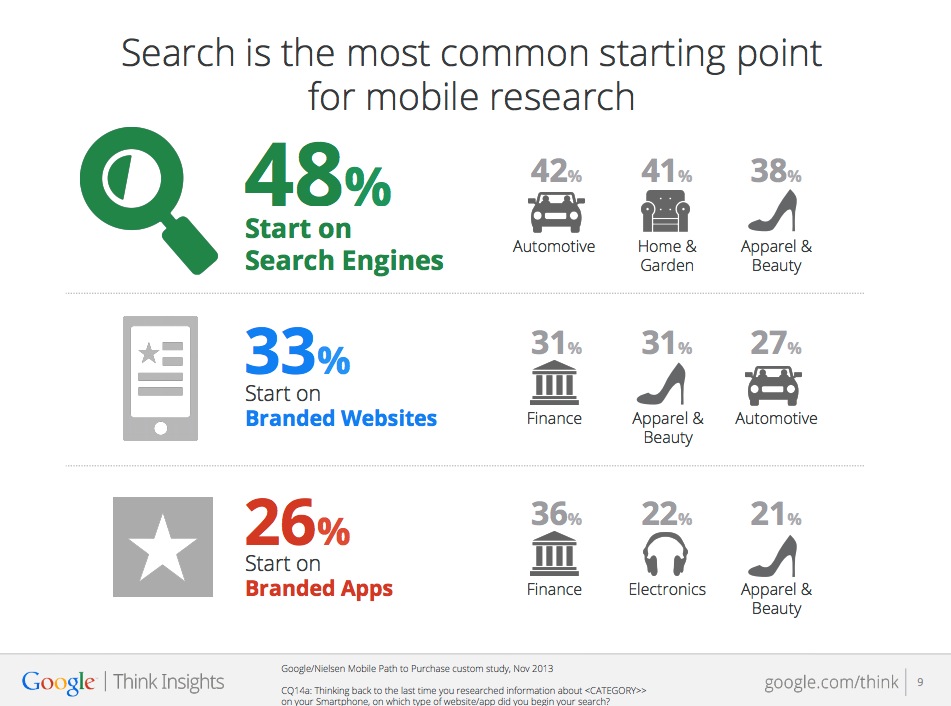
Entrepreneurs, CMOs or business owners in startup mode or website redesign be aware; the digital landscape is changing and so are the latest best practices in search engine optimization and social media.
"Growing your online business is critical and most entrepreneurs are aware of the need for internet marketing, but most have not taken or attended anything that would set them along the correct path," said Clay. "The Inc. Magazine and Binglearning event is a first step in an evolving process."
Entrepreneurs fired off questions ranging from "How do you recover from a Google penalty?" to "Why is my domain not being indexed by the engines?" to just wanting some simple guidance on blogging. Below are the highlights shared by the search and social experts for business owners to add to the marketing to-do (and not to do) list.
1. SEO is not an add-on or a last step of a website redesign. SEO must be an integral part of the process and should be architected into the site during design.
2. Invest in excellent content. Hire talented writers verified with social influence and a working knowledge of SEO. Having an in-house team of brand journalists can be the secret sauce to growing an online business in both search and social.
3. Do NOT buy links or try to grow social relationships through buying likes, friends or followers warns Forrester. Never hire any agency selling links as that will lead to penalties. Links should happen because you earn them and never because you negotiate them.
4. Understand the relationship between SEO and Social. There are significant SEO benefits of using social amplification to proliferate content to highly targeted and pre-qualified psychographic traffic. Put content in front of the right audience at the right time with the right message and they will be compelled to engage with and share it. Create content for your target audience. If the content engages them, your audience will influence the engines for you. "It only works every time," notes aimClear Evangelist Marty Weintraub, author of the Complete Social Media Guide to Community Management.
5. Avoid the "all-or-nothing" approach. Walker advises entrepreneurs not to follow the hype and the headlines and try a wide variety of tactics but focus on nothing. Also, don't avoid everything. If you're new to digital or not sure where to take your existing digital strategy, read, attend events, and then hire an expert for an assessment (in that order) so that you'll be empowered to make solid decisions about what will work best for your company.
6. Ask for the reports that matter most and avoid getting caught up in too much data. If you are new to Google Analytics, the simplest and most important information is your "referrers" data. "Find out which websites and which of your social media accounts send you the most traffic and how that traffic is behaving on your site," said Walker.
Like in any business, it's not a sprint, it's a marathon and the results will not be reaped from attending one learning event, but that is the first step in getting started.
Forrester reminds business owners, "SEO and social marketing isn't an overnight success story or a one-time effort. Like wealth-building, investing in SEO takes time and continued effort to earn full benefits."
Courtesy:Source
Friday, July 4, 2014
The State of Small Biz in 2014? The Sky's the Limit. Sort of:
In the face of squabbling lawmakers, a government that seems to close for business every month or so, and an on-edge economy, two guys at our recent Inc. 5000 Conference are telling a different story: optimism and opportunity!
Both dressed like the cartoon character Green Lantern, they are spreading the gospel of thepower of small business to grow in the face of evil economic forces. And they are perfectly positioned to so do: Their company, Ramsey, New Jersey’s Re:think, an Internet marketer, has grown a superpowered 1,186 percent over the past three years. Co-founder Tom McVey doesn’t see any reason such success should be limited to the hundreds of companies represented at the conference. His forecast for 2014? “The sky’s the limit!” he says. “We believe any business has a chance to stand out.”
It’s not just the Green Lantern guys who feel this way. Their peers, the CEOs of the 5000 fastest-growing companies in the country, are hugely bullish, too. In an exclusive survey of recent Inc. 5000 founders and CEOs, 37 percent characterized their business prospects as “excellent.” Another 45 percent said their prospects were “good.” (Not bad for a country that, only recently, was on the edge of economic Armageddon.)
In addition, these CEOs are counting on expansion--big time. Eighty percent said they planned to boost head count, and the same share said they would increase the number of products and services they offer. “I think it’s unbelievable,” says Tom Gimbel, founder of Chicago staffer LaSalle Network. “I think the economy’s really good.”
The likes of McVey and Gimbel, of course, aren’t your average joes. (The typical Inc. 5000 company has grown 468 percent over the past three years.) They always seem to be upbeat in the face of adversity. Unlike many in the business community, they feel they can grow in good times and bad.
Despite the optimism, our all-stars have concerns. That’s what makes this year’s look at our Inc. 5000 growth companies so interesting. In a normal recovery, these CEOs would be 100 percent upbeat. But there are clouds of doubt because of factors beyond their control--doubts they share with business owners across the board. Simply put: If Andy Grove started an only-the-paranoid-survive club, they would be charter members.
Why so worried? Gridlock in Washington, the Affordable Care Act, and weak-kneed consumers top the list. Those things are all related, and together they produce high-water levels of uncertainty. After all, who wants to take a chance on a big new investment when the stock market could plummet 1,000 points because of gamesmanship in Washington? Sure, some in Congress do a great job talking up the importance of small business. But when it comes to providing a stable legislative environment so that growing companies can thrive? Nah, that’s so German.
No wonder, then, that among a broader spectrum of businesses, pessimism reigns. In a recent survey from the National Federation of Independent Business, 62 percent of CEOs said now is not a good time to expand. “In the past, when we got into a strong hiring pattern, it would go 18 months or two years,” says Dean Le, of SoloPoint Solutions in Santa Clara, California, which places engineers. “Since 2008, we’ll have a couple of strong months and then a couple of weak months.”
Given all that, how will things play out in 2014? Well, look at the good news and the bad news. And once you do, you’ll see that barring any midterm election-year suicide missions--or a curve ball or two--the new year is going to look pretty good compared with the most recent stretch of economic activity.
We’ll start with the good news.
One of the most important factors: The housing crisis is in the rearview mirror. Housing has been rebounding for more than a year, with the S&P Case/Shiller index of housing prices up 11 percent in the 12-month period ended last June. And there are few things better than a robust housing sector to get an economy rocking. First of all, about one-sixth of smallprivate companies are in housing-related fields, according to U.S. Census data (homebuilders, lumberyards, plumbers, and on and on). And when home values rise, that turns on the cash-flow spigot. After all, about a quarter of small-business owners use the equity in their homes for business purposes, reckons Minneapolis’s Barlow Research Associates.
Access to credit, a sore point among fast-growth companies, is also getting better--or at least it was. The final 2013 numbers will probably be depressed by the government shutdown, but a Small
Business Administration
report issued before the closure showed year-to-date loan volume up 15 percent compared with 2012. Delinquency rates are also at all-time lows, says William Phelan, president of PayNet, which collects data for commercial loans and leases: Just 1.19 percent of small-business loans are 31 days to 90 days overdue, and only 0.29 percent are more than 90 days past due. “Small business is in great fiscal shape,” he says. It helps that big companies--often the customers of smaller ones--are posting record profits. Five years ago, putting the screws to smaller vendors was a nifty way for big companies to improve cash flow. Now, there’s less incentive to do that.
That’s the sunshine. And in a perfect world, or even a sort-of-perfect one, the path would be clear. But in a uniquely unproductive political environment, the path is anything but. To be fair, mild political inertia can have a bizarre silver lining for business: no big surprises out of Washington. But when the country’s elected representatives shut down the government and only later realize that the families of soldiers killed in action will be denied death benefits, you’ve got more than garden-variety infighting.
Bo Bothe, co-founder of Houston marketing agency BrandExtract, says the turmoil is tough on him. “My clients don’t know what the impact of the health care legislation is going to be,” he says. “They don’t know what the impact of the deficit will be. And when they don’t know, they hold back.”
The Affordable Care Act promises to make health insurance easier to buy and more affordable for millions. But for certain business owners, it just mucks everything up. Tim Guenther, CEO of Clickstop, in Urbana, Iowa, is one. He’s got 64 full-timers and pays 100 percent of their health insurance. Clickstop sells ratchet straps. After five years of buying straps from China, Guenther started assembling them here. That allowed him to be more flexible and customize orders.
But Guenther’s costs are higher than his Chinese competitors.’ His team includes 24 part-timers, and Guenther wants the flexibility to add to their hours as needed. But he needs to manage their hours more closely: He is keeping them under 30 a week so he doesn’t have to offer health insurance. “It costs us about $7,500 to insure a family,” he says. “The workers in China aren’t making that much in wages in an entire year.”
That said, Guenther, like many in our survey, is continuing to expand--he’s just doing it with an eye on the Beltway. For him, the glass is still half full. He’s right. Fundamentally, the outlook is pretty darn good. Economic growth is supposed to pick up. (Mark Zandi, chief economist for Moody’s Analytics, expects 2013 GDP growth to be just under 2 percent, but it should hit a relatively robust 3 percent in 2014.)
And even if it doesn’t, businesses will benefit from the housing rebound, better access to credit, and more bullish customers.
Thursday, July 3, 2014
Digital Marketing Should Take a Leading Role in Startup Growth Strategy
It is often thought that for a startup the best form of
communication is print and media advertising. The reality is very different
as digital marketing strategies have proven to be much better ways to
communicate with your customers and are also more cost effective.
Since you have more time and talent than
disposable resources, acquiring customers means understanding what makes
them tick! Digital marketing offers various options to help your business reach
your goals!

According to Google Consumer Barometer most people search for
products and services online before they purchase. This is why you will need a website. As
a startup you should own a digital space where you can control the brand
experience and influence the purchasing decision.
The main advantage of digital marketing is that it has
no borders and startups really can compete with the big players!
Conversion design
Most startup websites are not built to sell. Your website has to
be the centre of your marketing universe. Mobile friendly websites turn
visitors into customers! In this world of constant connectivity,
consumers expect to find the information that they want, when they want it –
especially when they’re on the go. Having a pretty design is not enough, there
are other factors that affect the purchasing decision.Conversion design helps
you do just that! When a client finds you, they have to be presented with a
very compelling path that leads them to a place where you can convert them.
According to Google, each mobile search triggers nearly 2 follow-up
actions (a store visit, a phone call, purchase etc)! What’s more
interesting – 55% of follow-up actions occurred within an hour! Mobile search
really drives multi-channel conversions.
If you aren’t good at design, employ the services of
conversion design specialists who can help build your brand.
Search Engine Marketing and AdaptiveSEO™
Most traffic to websites comes from search engines! The main
thing here is to get these top rankings on Google search! AdaptiveSEO™ is
one way to achieve this.
Step 1 Make sure your website is ready for AdaptiveSEO™.
Step 2 Fix any existing technical OnSite SEO issues.
Step 3 Start monitoring your website monthly and always provide
your visitors with quality content.
If you do not have the necessary tools or skills, I recommend
you to get a professional AdaptiveSEO™ agency to help you out!
Social Media Marketing`
My best advice is: don’t try to master all the channels or be on
Twitter and Facebook just because your competitors are there. Identify what
works for you!Facebook, Twitter, LinkedIn, Instagram, Reddit and
Pinterest are currently the most popular social media networks.
Facebook – you need to grow your fan base by providing them with
enjoyable visual posts like pictures and videos.
Twitter – potential customer respond well to blog links.
Reddit – you can post here on a daily basis but it can be a very
slow process. In order to get a great number of „upvotes“, make sure your posts
are unique and well-targeted.
Whichever channel you choose to be on is up to you, but one
thing is for sure, you need to have a Google+ account. Share
your content with your circles on Google+ and when people +1 it the content
will be indexed by Google.
Social media is about building relationships and if you build
relationships with the right people , you will generate business as a result of
this. A great tool to manage your social media posts is HootSuite.
E-mail marketing
Don’t believe what they say, email marketing is not dead!
There are different ways of capturing emails: with email
submits offer incentives – Become a subscriber and get your
amazing guide! Newsletter subscriptions and blog subscriptions are pretty
straight forward and just mean people want to get regular updates from you!
Provide your subscribers with valuable content and they will sign up!
I recommend you use the double opt-in options as this really
ensures your email list remains high quality. There are so many great email
marketing services out there, from Mailchimp to Reachmail, that give small businesses
free templates, analytics, and tutorials. These services remain free if you
have smaller email marketing lists of around 2000 or less.
Conclusion
Starting a new business is a bit like caring for your first
born. You need to do your best to make their future a success. Effective
digital marketing strategies can be the difference between success and failure
of a startup! In this post I only touched a surface on what could be
done so make sure these 4 digital marketing strategies are done right!
One thing you should remember is: everything you do, or don’t
do, in the digital world is visible to your customers, and everything that has
been said about you is visible on demand, around the world. This means digital
marketing should not be delayed until you have established with a high
turnover, you should act now! Without effective and innovative marketing, you
don’t have a business!
A tip: If
you are struggling to work out your strategy, contact us! We have experience in
various industries and can advise you the best way to move forward! Or You Should Hire a Google Certified PPC Exprt.
5 Sources of Side Revenue for Your Small Business

One of the most common problems I see with small businesses is they have all their eggs in one basket.
They have one form of revenue. Usually that means one type of product or service.
Then there’s some change or disruption in the market and it overturns their apple cart. Their failure to diversify kills them.
A lot of businesses are guilty of this. It’s not uncommon.
The solution is not to double down and deepen your investment in that one vertical. That would only exacerbate the problem.The answer to market turmoil is to diversify your business – to create a more nimble business and look for opportunities to bring in revenue on the side.
You don’t give up your core focus, but you do think strategically about other opportunities.
The key here is to not have the side project get in the way of your primary focus. If you make, say, $100/hour as a consultant and you take a side gig doing proofreading at $50/hour, it will create problems.
The side gig will take time away which you should be spending on the $100/hour gig, and you’ll be less motivated to work on the $50/hour gig.
By the same means, if you have a flower shop and you start a side business waiting tables, that will take time away from your primary focus.
I’m also not talking about “get rich quick” types of moneymaking schemes – or work that gets in the way of your primary business.
When I talk about “side revenue” I mean ways in which you can leverage underutilized resources or create new opportunities for people to buy from you.
For example, take a look at almost any shopping mall. The main purpose of a shopping mall is to rent out spaces to stores. However, many malls have gathering spaces they may rent out for meetings.
There may also be bubble gum machines, soda dispensers, and massage chairs. The mall either maintains and manages the machines on their own, or they provides a small amount of space for other companies. Without having to put in much effort, they get revenue each month.
At my local mall, there’s even a train that kids can ride – at $3 a pop.
How can you make your business think like a shopping mall?
(OK, that sounds kind of strange. But you get the idea.)
All of these small measures can really add up.
For many small businesses, side revenue can make a big difference – the difference between bleeding red ink and being in the black.
A small newspaper in Poconos, Pennsylvania told its photographers to start taking photos of people in crowds at small events like football games and parades.
They they “post them online as photo galleries,” says editor Bill Watson. “In addition to drawing lots of hits online, we get reprint traffic off them.”
That one change generated about $3,200 from reprints of its photos – a big deal for a small newspaper.
Of course, every small business is different. But here are a few ideas about how to make side revenue:
1. Repurpose Existing Equipment
Do you have extra equipment lying around that you could make better use of?I have a client who had extra commercial grade printers that were sitting unused much of the time. So he set up a side business where he does large-scale prints and prints photos on canvases for customers. It’s putting to better use equipment that otherwise would be just lying around.
2. Teach a Course Using Your Expertise
Turn your expertise or hobby into a course. Nearly everyone is an expert in something – or at least enough of an expert to teach others.It’s become easier than ever to create a course. I recently interviewed one of the early employees at Udemy.com which allows people to very easily create, market and sell a course. They have popular courses in everything from how to play the banjo to photography to how to code HTML.
There are other companies doing the same type of work.
3. Add Revenue-Producing Machines On Site
Depending on the layout of your location – and whether you get a lot of traffic – you may be able to add on-site revenue.One easy example is vending machines. Stick ‘em in the corner and forget about them. Either employees or the public buys snacks and you make money.
You can even have another company manage it so you don’t have to think about it.
Why stop at vending machines? What about candy dispensers?
It drives me crazy when I get my haircut and I see they have an empty chair or two. Why? Rent it out and make use of the space.
4. License Your Existing Work
If you are an artist or a photographer, you can license your work or place it on a website that allows the public to buy or license the prints.If you are a writer, you can take something you’ve already written and put it on Amazon’s Kindle store. (Check out my interviews of Guy Kawasaki and Hollis Carter and Jonny Andrews if this is of interest to you.)
5. Sell Something New to Existing Clients
Once you have convinced a customer or client to spend $1 on your business, you have a much greater chance of selling them something else. So think about what other services you can sell current – or past – clients or customers.I see a lot of consultants these days who are going back to their existing clients and offering “social media” consulting services.
6. Sell Your Product in Other Ways and Other Locations (Bonus Tip)
When I interviewed Neil Gottlieb, the “Founding Twin” of Three Twins All-Organic Ice Cream, I was amazed to find out one of the fastest-growing ice cream companies in the U.S. started out with nothing more than one small scoop shop.
The company almost didn’t survive, because they opened in September 2005 – right before one of the wettest winters on record. No one wanted to buy ice cream for six months.
Now, they package and sell their ice cream in stores around the U.S. and internationally. They don’t have to worry about whether it’s raining in Northern California because it may be sunny elsewhere – and wherever that is, people are probably buying ice cream.
Courtesy : Source
Wednesday, July 2, 2014
Seven Tips to Brand Your Business Online:
Pay attention to what your customers are saying about you online. Participate in the conversation. Listen to their wants and needs. Let them help you with customer service, new products/services, and market research. Let your customers tell their friends about your brand. And stop thinking about how you’re going to control what they they say about you
Be vigilant. Not just in repeating your brand message over and over again, but monitor and listen to the conversations happening online about you, the company, the products, the services, your competitors, and the industry. Today we have such a great opportunity to know exactly what people are saying about us. Harness that information, be vigilant about paying attention, and use it to massage your messaging, tweak your offerings, or even create new products.Be honest. “I’m sorry” works wonders. If there is a product issue, be honest about what is happening. Keep people updated. Communicate the ups and the downs. When you’re honest about any issues, challenges, or concerns, there isn’t a story to tell. People are willing to forgive. It might be painful at first, but the pain won’t last as long as it would if you lie or attempt to sweep the problem under the rug.
Be open. This one is so hard. It’s difficult for human beings to keep open minds about many things. When your company, your product, your service, your employees, or even your policies are under attack, it’s really hard not to get defensive. But if you show a willingness to talk about issues, and even change your policies based on feedback, you’ll create the most loyal customers.
Be active. Many business leaders think they have to jump on the social media bandwagon and have accounts on all of the social networks. That just isn’t true. If your customers and prospects aren’t on Twitter, for instance, why would you spend precious resources there? That said, it could very well be your customers use Twitter for personal reasons. Maybe they follow celebrities, watch for deals, or lurk to get the news but they don’t tweet or engage in conversation unless they have a customer service concern. If you’re being vigilant about listening to the conversation, you’ll see them tweet about you, even if you don’t have a Twitter account. Be active in responding to that and be open in the feedback they’ll provide.
Be consistent. Many organizations don’t know who they want to be when they grow up. Because of that, employees all deliver a different message when they attend trade shows, when they meet someone on an airplane, when they blog, when they tweet, or when they go to networking events. The rules haven’t changed…only the tools have changed. Figure out what your vision is, create your elevator pitch and supporting messages, and train everyone to use them. The way your organization is described should be consistent – through every single person who works for and with you. After all, if you aren’t consistent, how can you expect your customers to know who you are?
Be creative. Not every person who complains about you online will deserve a response. And not every complaint will be solvable. But if you’re creative in how you handle those things, other customers and prospects will see how you try and will appreciate the effort. There is a sandwich shop in New York that had a bad review. One bad review. The person anonymously posted on Yelp that the sandwich they’re famous for was disgusting and uninteresting. The next day, the sidewalk chalkboard sign in front of the restaurant said, “Stop in and try our daily sandwich. The one @djinto thinks is disgusting.” Not only did that encourage people to stop in, it made the rounds on the social networks. People love a sense of humor and they love creativity.
Be proud. Once you figure out your vision – what you want to achieve, who you want to be when you grow up – post it everywhere. Create plaques for employees to hang over their desks. Have a sign made for your entryway. Include it on your website. Some organizations even include it in their email signatures. While it will eventually be something people are accustomed to seeing, no one will have any doubt about where you are going. Be proud of what you are doing and don’t be afraid to tell the world about it.
Subscribe to:
Posts (Atom)